Donna Sicuranza: Biography, Age, Family & TEAM Career
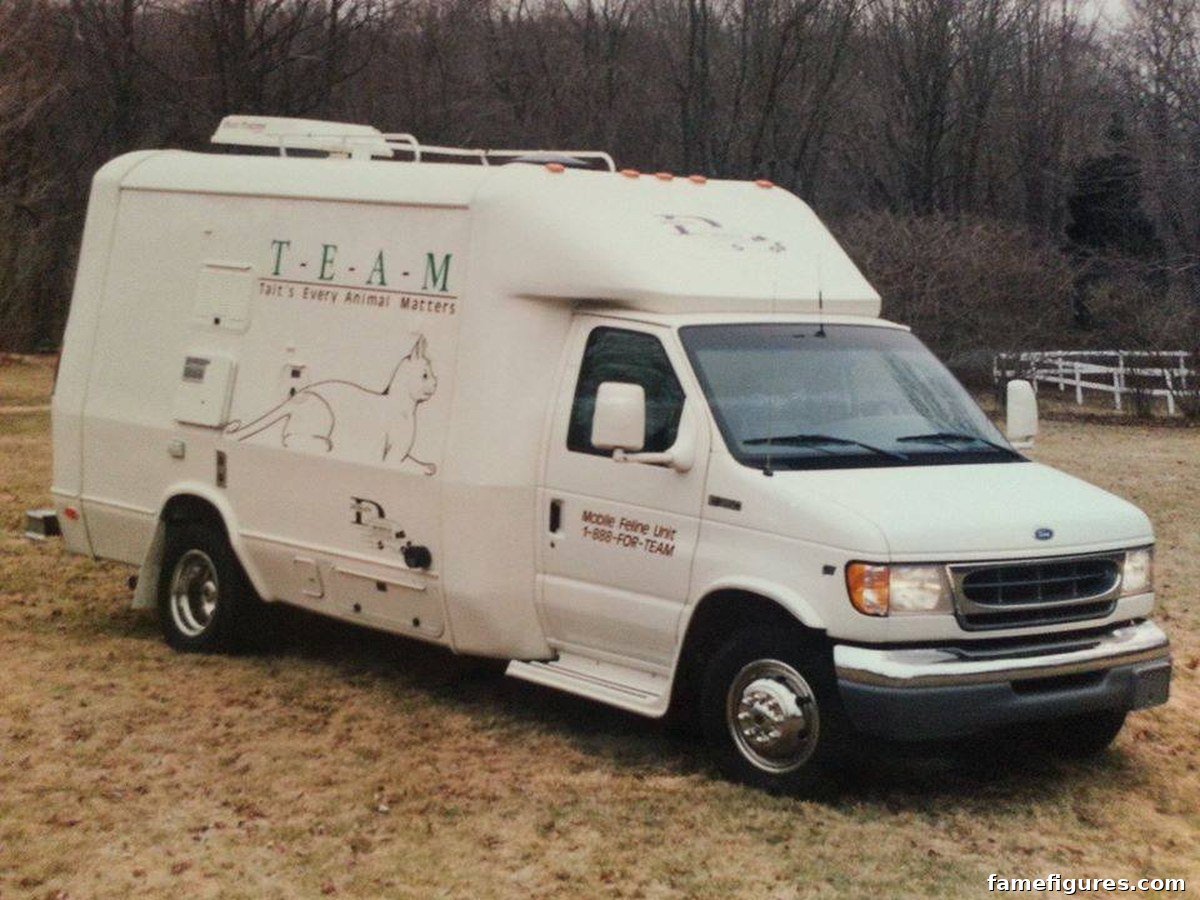

Most people who type Donna Sicuranza into a search box are looking for one of two things: the story of a Connecticut woman who has spent nearly thirty years getting cats spayed and neutered, or the meaning of an Italian phrase about women’s safety. The woman is real, the work is remarkable, and the two meanings are easy to mix up. Donna Sicuranza is the long-serving Executive Director of Tait’s Every Animal Matters — TEAM for short — the nonprofit behind Connecticut’s first mobile feline spay and neuter clinic. Since that clinic first rolled out in 1997, its veterinarians have sterilised and vaccinated more than 225,000 cats. This is the full story of her life and career — and, because the public record is thin in places, an honest account of what is known, what is only reported, and what simply is not public.
Quick Facts
| Full name | Donna Sicuranza (professionally listed as Donna Sicuranza Marconi) |
| Date of birth | Not publicly confirmed |
| Age | Not publicly confirmed |
| Birthplace | Not publicly confirmed |
| Nationality | American |
| Education | English Language and Literature — Fairfield University and Trinity College, Hartford (reported in professional listings) |
| Occupation | Nonprofit executive; Executive Director of Tait’s Every Animal Matters (TEAM) |
| Known for | Connecticut’s first mobile feline spay and neuter clinic |
| Organisation | Tait’s Every Animal Matters (TEAM), Westbrook, Connecticut |
| Partner | Dr John A. Caltabiano, veterinarian (longtime partner; died 2009) |
| Sister | Dina Sicuranza (Senior Veterinary Technician, TEAM) |
| Children | Not publicly confirmed |
Early Life and Education
Here is the first honest thing to say about her: almost nothing about Donna Sicuranza’s childhood is on the public record. No reliable source gives her date of birth, her birthplace, or any detail of her early years, and she has never given interviews about her private life. That is not unusual for a nonprofit administrator — she is known for her work, not for being a public figure — but it does mean that any biography which confidently states her age or where she grew up is guessing. This one will not.
What the professional record does show is a woman trained in words, not in veterinary medicine. Professional listings associate Sicuranza with two Connecticut institutions: Fairfield University, where she is reported to have taken a bachelor’s degree in English Language and Literature, and Trinity College in Hartford, where she is reported to have completed a master’s degree in the same subject. The details — exact degrees and graduation years — are not confirmed by either university in the public record, so they are best described as reported rather than established. What matters more is the shape of the education: she studied language and literature, and that training shaped everything she did next.
From 1983 to 1997 she worked as a freelance writer, editor and public relations specialist. A 2013 profile in Connecticut Magazine described her background in journalism and public relations, and the same reporting places her as a friend of veterinarian Dr John A. Caltabiano at the point when his earlier animal-adoption work was being reshaped into something new. It was that friendship — between a communications professional and a vet who was worried sick about unwanted cats — that became the foundation of TEAM. She also served as editor of TEAMWORKS, the organisation’s own newsletter, a role that kept her writing and editing skills at the centre of the charity’s work for years.
Career
The Charity Behind the Clinic
To understand her career, you first have to understand where TEAM came from. The organisation grew out of the estate of Vernon A. Tait, a Connecticut animal lover and businessman whose money established an animal-focused charity. Historical reporting in Animal People magazine in May 1999 traced how Tait’s All-Animal Adoption charity — which connected people who wanted animals with animals who needed homes — became the financial foundation for a new nonprofit with a sharper mission: Tait’s Every Animal Matters. The idea was simple and, at the time, radical for Connecticut. Instead of waiting for cat owners to come to a vet, take the vet to the cats.
The problem TEAM was built to solve was brutally practical. In the mid-1990s, sterilising a cat at a private veterinary clinic in Connecticut could cost hundreds of dollars — in a 2014 interview with Fox 61 News, Sicuranza pointed out that neutering a male cat could cost $200 to $300, and spaying a female could cost $200 to $300 or more, with some parts of the state seeing quotes of $500 or higher. For families on low incomes, and for the volunteers feeding colonies of feral cats, those prices meant the surgery simply did not happen — and the kittens kept coming. A mobile clinic, bringing affordable surgery into communities across the state, was the answer.
Building the Clinic on Wheels
In 1996, plans for the TEAM Mobile Feline Spay/Neuter Clinic took shape under the direction of Dr John A. Caltabiano — an Old Lyme veterinarian who was then TEAM’s president — and executive director Donna Sicuranza. TEAM’s own history of the project names them both, and it is worth pausing on that: she was already the organisation’s executive director before the clinic existed. She did not join a successful programme; she helped build it from a plan on paper.
On 1 March 1997 the plan hit the road. Ten cats were spayed or neutered and vaccinated on board on that first day out — a modest start for a project that would grow into something Connecticut had never seen. Within six months the clinic had sterilised 5,000 cats, and by its first anniversary the total was 8,000. The idea caught on so fast that in 1998 Animal People magazine wrote: “If the Guinness Book of Records had a line for the most animals fixed in a year by a mobile clinic, TEAM would be in it — twice.” TEAM was soon being held up as a national prototype for mobile spay and neuter work.
The numbers kept climbing. TEAM’s own history records more than 206,000 cats sterilised and vaccinated by 2021, and the organisation’s current website puts the total at more than 225,000 since 1997. By 2013 the operation had reportedly grown to two mobile units visiting more than 30 communities and averaging around 35 surgeries a day — a scale that turned a one-van experiment into a statewide service. The clinic celebrated its 200,000th cat in 2019, a rescued calico kitten named Calypso. And through it all, Sicuranza remained the person running the organisation behind the van.
What the Clinic Actually Does
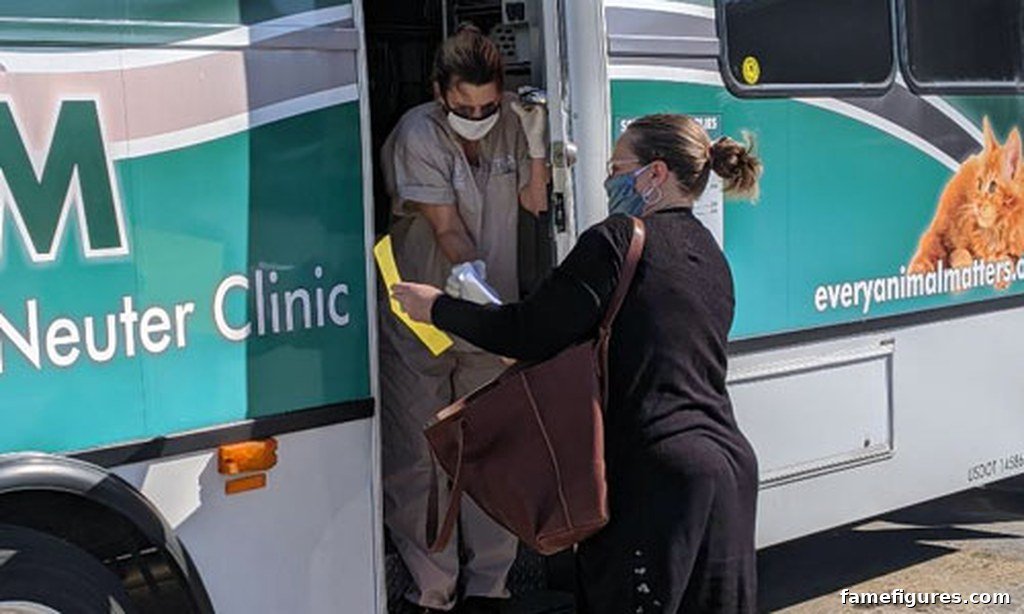
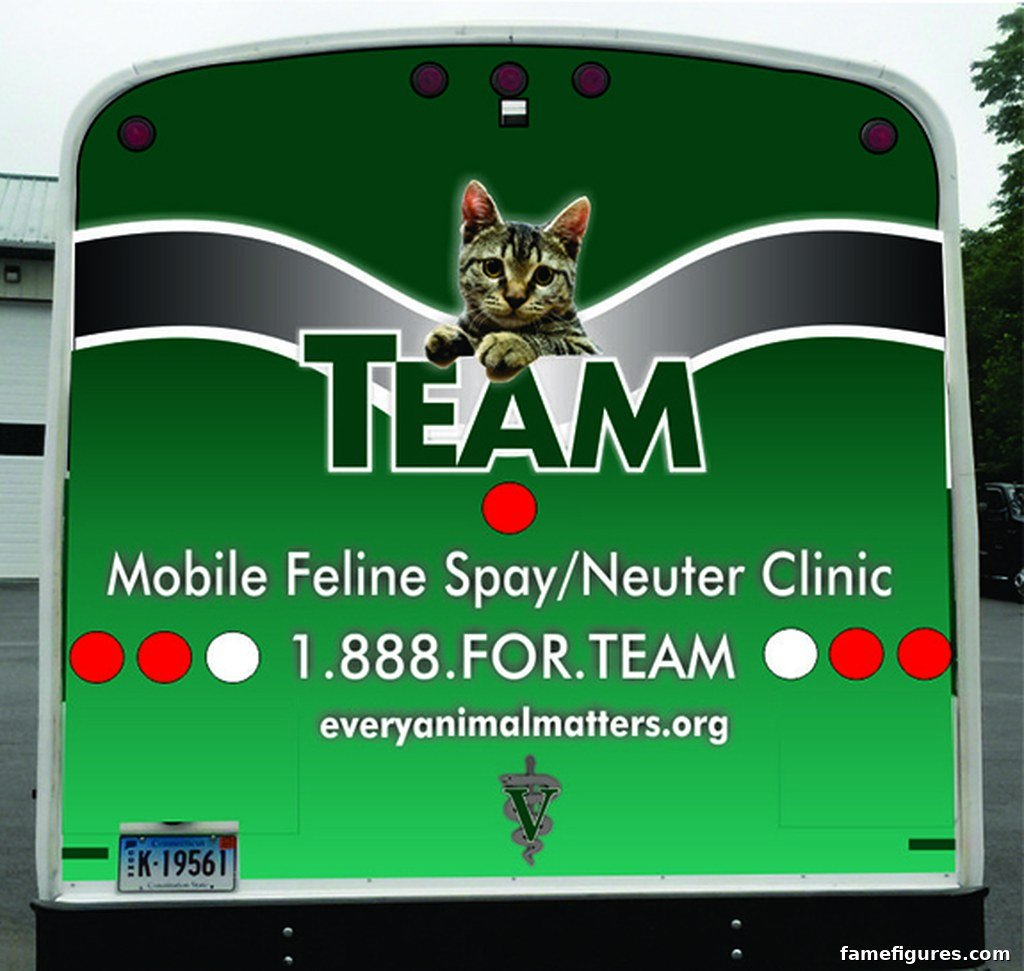
The TEAM Mobile Feline Spay/Neuter Clinic is a fully equipped surgical unit on wheels. It travels to towns and cities across Connecticut, and any cat in the state — domestic or feral — is welcome on board. The standard spay and neuter package includes a brief examination, vaccinations against rabies, distemper and respiratory infections, a nail trim and ear mite treatment where needed. The point, from the beginning, was access: affordable surgery, delivered where people live, before unwanted kittens are born.
The clinic now runs five days a week, and sometimes on Saturdays too, moving between towns across the whole state. Cat owners and feral-cat caretakers book appointments through the organisation — the number has barely changed in decades, 1-888-FOR-TEAM — and the van turns up where it is needed. It is a deliberately unglamorous model: no grand headquarters, no glossy campaigns, just a surgical unit that keeps showing up. That consistency is a large part of why the programme has lasted. A charity that depends on one charismatic founder usually fades when that founder steps back; TEAM’s strength has always been that the system, not any one personality, does the work.
That focus on access also shaped the organisation’s later work. In 2014 TEAM added the TEAM Incentive Program, known as TIP, to support the volunteers who look after feral cat colonies. And Sicuranza was involved in discussions around FeralStat, a project associated with Caltabiano that explored an oral contraceptive for feral cat populations — a different kind of answer to the same problem of too many kittens and not enough homes. None of this is glamorous work. It is scheduling, staffing, fundraising and keeping a surgical van on the road five days a week. That is what an executive director does, and Sicuranza has done it for close to three decades.
Carrying On After 2009
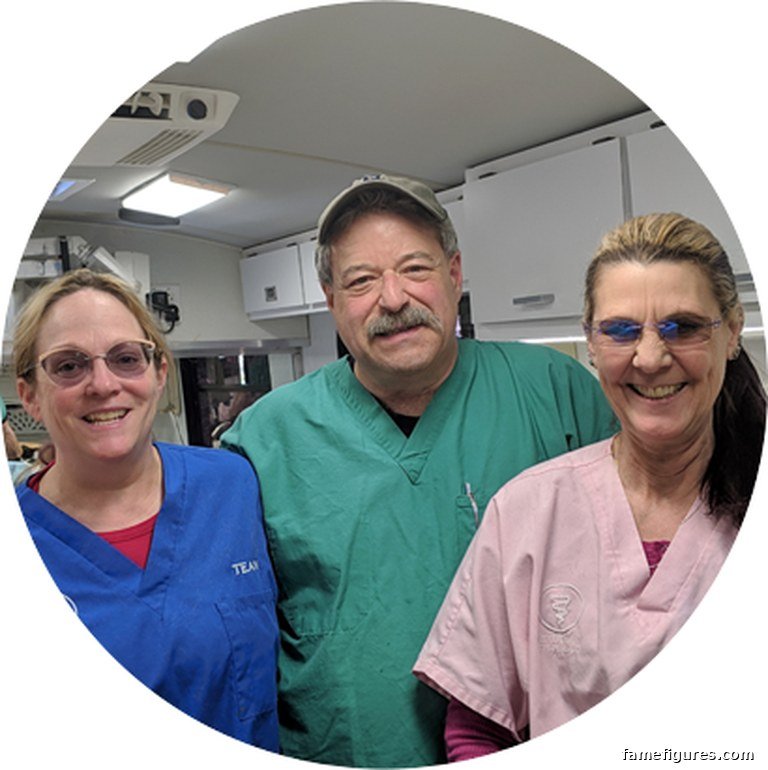
The hardest chapter of Donna Sicuranza’s working life came in November 2009, when Dr John A. Caltabiano died on 6 November after a battle with cancer. He was not only TEAM’s president and the veterinarian who had launched the mobile unit — he was, as a Connecticut Department of Agriculture bulletin dated 10 March 2010 put it, survived by his longtime partner, Donna Sicuranza of Westbrook. His obituary in the Hartford Courant identified her the same way. The same state bulletin recorded that she would continue his work at TEAM and on FeralStat.
She did. A Connecticut General Assembly hearing record from 2002 already identifies Donna Sicuranza as TEAM’s Executive Director and records her speaking about the organisation’s work — evidence that she was its public voice long before Caltabiano’s death — and TEAM’s own 2019 newsletter still lists Donna J. Sicuranza as Executive Director and editor of TEAMWORKS. As of 2026, TEAM’s staff information continues to list her as Executive Director under the name Donna Sicuranza Marconi. The veterinary work itself is done by others — TEAM’s Medical Director is Dr Art Heller, and its veterinary staff includes her sister Dina Sicuranza as Senior Veterinary Technician — but the organisation has been hers to run for the whole of its life.
The team she leads is small, and TEAM makes a point of saying so: most of its people have been with the programme from the start, more than twenty-five years of it. Alongside her sit Medical Director Dr Art Heller, Program Coordinator Lacey J. Raymond, and veterinary technicians including Susan King — the same names that appear, year after year, in the organisation’s own materials. There is no revolving door of executives and no rebranding every few years. The charity’s own description of itself has stayed the same throughout: one goal, stated plainly on its homepage, “to spay or neuter as many cats as possible before they reproduce.”
It is worth being clear about one thing: Sicuranza is not a veterinarian, and no reliable source has ever presented her as one. Her contribution is organisational. She took a vet’s idea and a dead animal lover’s money and turned them into a clinic that has now served a quarter of a million cats — and she kept it running through the loss of the partner she built it with. That is the story.
Personal Life
So, is Donna Sicuranza married? There is no publicly confirmed husband. What the public record does establish is her long relationship with Dr John A. Caltabiano, the Old Lyme veterinarian who co-founded the TEAM mobile clinic with her. The Connecticut Department of Agriculture and the Hartford Courant both described her as his longtime partner after his death in 2009. Beyond that, her marital history is not publicly documented — and the “Marconi” in her current professional name, Donna Sicuranza Marconi, is not explained by any source we could verify, so it would be wrong to guess what it means. Anyone who tells you the name of her husband is inventing it.
The same honesty applies to the rest of her family life. Biographical profiles name her parents as Robert “Red” Sicuranza and Marlene C. Patitucci Sicuranza, and one profile notes that her father served as an Army paratrooper during the Korean War. Her sister Dina Sicuranza works alongside her at TEAM as Senior Veterinary Technician — the family connection is right there on the organisation’s own staff page. Whether Donna Sicuranza has children of her own is not established by any reliable source. She has kept her private life private, and the public record respects that: it is full of her work and nearly empty of anything else.
There is one more confusion to clear up, because it trips up other biographies of her. A different woman named Donna Marie Sicuranza — born in 1942, raised in Pelham, New York, a banking professional who worked at the Bank of New York for more than twenty years and retired as an Assistant Manager in 2007 — died on 10 March 2017 at the age of 74. She is not the TEAM executive. At least one online biography has merged the two lives, crediting the Connecticut animal-welfare leader with a banking career and a 2007 retirement that belong to the New York woman. They are two different people who happened to share a name, and this profile is about the Connecticut one only.
What Does “Donna Sicuranza” Mean in Italian?
Part of the reason this name is searched so often has nothing to do with Connecticut at all. In Italian, donna sicuranza — more commonly written sicurezza donna — means women’s safety and security: the feeling of being safe and supported in public spaces, at home, online and at work. The phrase appears across Italy in the names of self-defence courses, anti-violence centres, helplines and awareness campaigns run by towns, voluntary groups and community programmes. Italy’s free national helpline for women facing violence, 1522, sits at the heart of that same world. So a large share of the searches for “donna sicuranza” are people looking for women’s safety information, not for a biography — which is exactly why the results mix a safety guide with the story of a Connecticut nonprofit leader. If you came here looking for safety support, the right place to start is your local anti-violence centre or helpline, not a biography page.
FameFigures profiles the people behind the names people search for — from Good Morning Britain weather presenter Laura Tobin and BBC weather presenter Louise Lear to fellow weather presenter Keeley Donovan — and in this same series, the biographies of Denika Kisty and Alexis Maas.
FAQs
Who is Donna Sicuranza?
Donna Sicuranza is an American nonprofit executive and the long-serving Executive Director of Tait’s Every Animal Matters (TEAM), a Connecticut animal-welfare charity based in Westbrook. She helped build Connecticut’s first mobile feline spay and neuter clinic, which began operating on 1 March 1997 and has since sterilised and vaccinated more than 225,000 cats. She is professionally listed by TEAM as Donna Sicuranza Marconi.
How old is Donna Sicuranza?
Her age is not publicly known. No reliable source gives her date of birth, so any age you see attached to her name online is a guess. What is documented is the length of her career: she was already TEAM’s Executive Director when the mobile clinic was being planned in 1996, which puts her in charge of the organisation for close to thirty years.
Is Donna Sicuranza married? Does she have a husband?
There is no publicly confirmed husband. Her documented longtime partner was Dr John A. Caltabiano, the veterinarian who co-founded the TEAM mobile clinic with her; he died on 6 November 2009, and the Connecticut Department of Agriculture and the Hartford Courant both described Sicuranza as his longtime partner. Her marital history beyond that is not publicly documented.
What is TEAM (Tait’s Every Animal Matters)?
TEAM — Tait’s Every Animal Matters — is a Connecticut nonprofit charity headquartered in Westbrook. Its best-known programme is the TEAM Mobile Feline Spay/Neuter Clinic, a travelling surgical unit that brings affordable spay, neuter and vaccination services for cats to communities across the state. It began operating on 1 March 1997 and was Connecticut’s first mobile clinic of its kind.
How many cats has the TEAM mobile clinic helped?
According to TEAM itself, its veterinarians have sterilised and vaccinated more than 225,000 cats since the mobile clinic began in 1997. The organisation reported more than 206,000 by 2021, and the total has continued to rise since. The figure covers domestic and feral cats across Connecticut.
What is Donna Sicuranza’s net worth?
There is no publicly reported net worth figure for Donna Sicuranza, and it would be misleading to invent one. She is a nonprofit executive at a small Connecticut charity, not a celebrity with published earnings, and no outlet has reported her salary or wealth. Any number you see online is made up.
What does “donna sicuranza” mean in Italian?
In Italian, donna sicuranza — usually written sicurezza donna — means women’s safety and security. The phrase is used across Italy for self-defence courses, anti-violence centres, helplines and awareness campaigns. It is a separate meaning from the name of the Connecticut nonprofit executive, which is why search results for the phrase mix safety guides with her biography.