Paris Gourtsoyannis: Biography, Age, Partner, Family, Career
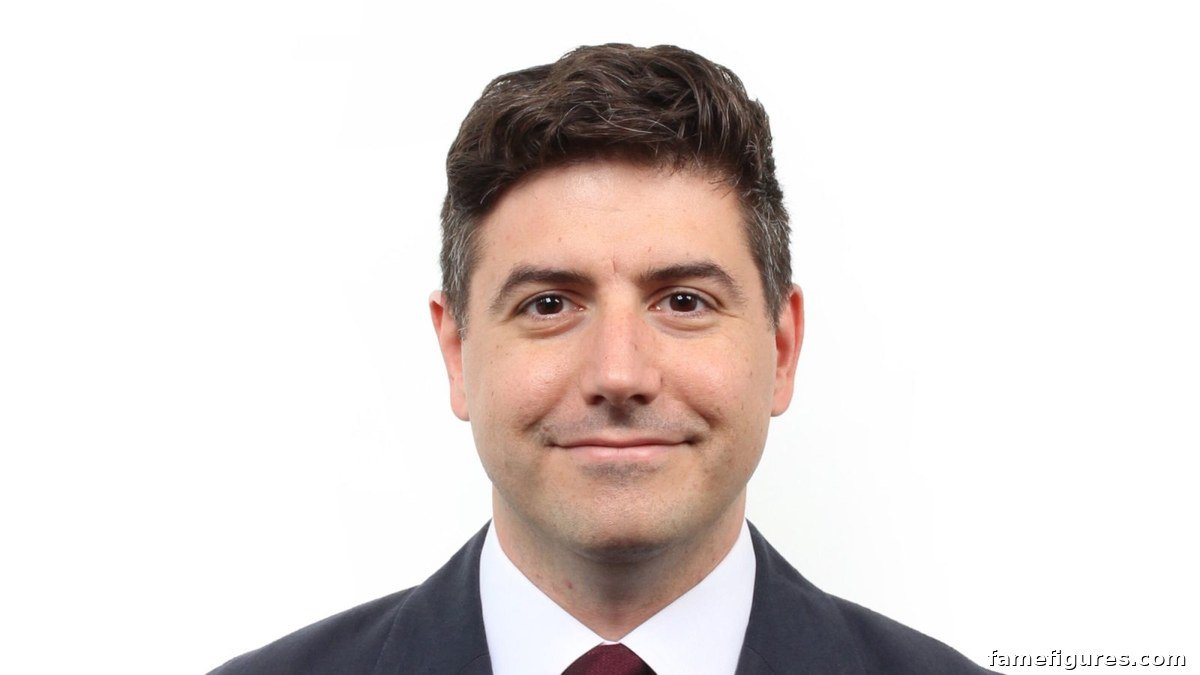

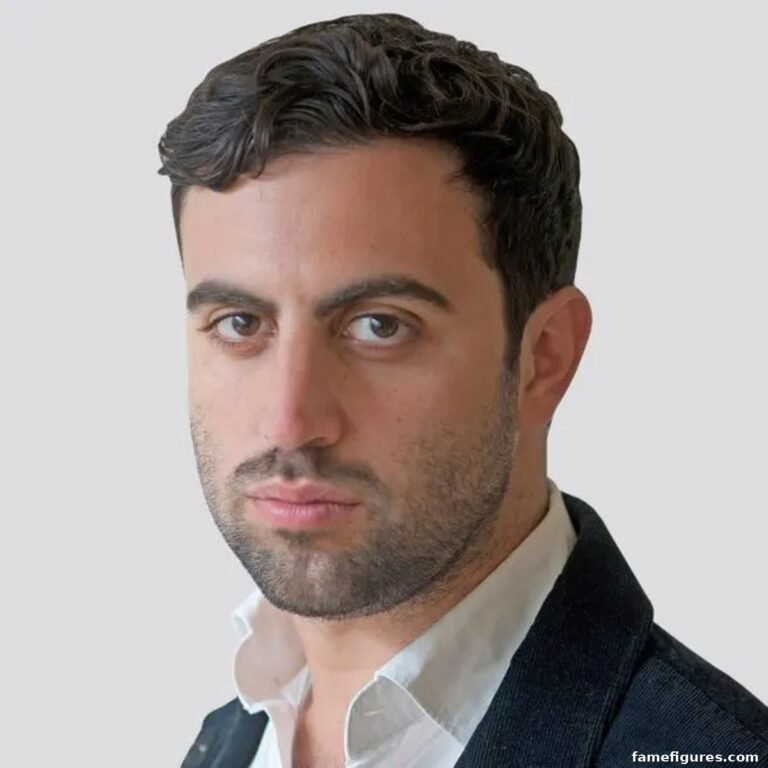
Every night, when the politics of the day is argued over in Westminster, there is a good chance the man explaining what it means for Scotland is Paris Gourtsoyannis. He is the BBC Scotland Westminster correspondent — a print journalist turned broadcaster who spent more than four years covering Brexit and two general elections for The Scotsman, produced programmes for ITV and Channel 4, reported from Westminster for STV, and now fronts the BBC’s Scottish political coverage from London. His is an unusual story, too: Canadian by birth, raised largely in Belgium, a Greek citizen working in British politics. This is the full story of his life and career — and an honest answer to the questions people keep asking about his age, his partner and his family.
Quick Facts
| Full name | Paris Gourtsoyannis |
| Date of birth | Not publicly confirmed |
| Age | Not publicly confirmed (graduated from the University of Edinburgh in 2010) |
| Birthplace | Canada (exact place not publicly confirmed) |
| Nationality | Greek citizen; Canadian by birth |
| Education | University of Edinburgh (graduated 2010) |
| Occupation | Journalist and broadcast correspondent |
| Known for | BBC Scotland Westminster correspondent; formerly Westminster correspondent at The Scotsman and STV News |
| Employer | BBC Scotland (2025–present); STV News (2023–2025); The Scotsman (2016–2020) |
| Partner | No wife or partner publicly confirmed |
| Children | None publicly confirmed |
| Social media | @thistlejohn on X (Twitter) |
Early Life and Education
Paris Gourtsoyannis was born in Canada, though the exact place of his birth has never been published. What is known about his early years comes, unusually, from his own pen. Writing in The Scotsman in March 2019, on the day the United Kingdom had originally been scheduled to leave the European Union, he described himself as “Canadian by birth” and explained that he had “lived for most of the first half of their life in Belgium”. The reason he was able to live and work in Britain, he wrote, was that “I’m a Greek citizen and a European.” It was a personal column — later reprinted in the University of Edinburgh’s alumni journal — and it remains the fullest account he has ever given of where he comes from.
That background matters to the way he writes about politics. He is a European who grew up between continents, reporting on a country arguing with itself about Europe. In the same 2019 piece he wrote about the “citizens of nowhere” — people whose lives straddle borders and who found their status suddenly up for debate as Brexit unfolded. It was not the detached voice of a lobby correspondent, but the voice of someone with a personal stake in the story.
By 2019 he had been living in Scotland for a long time. In a column that year about the European elections, he wrote of his “13 years of experience” of Scots — “who rarely hesitate to tell you what’s coming, especially if it’s no good” — a line that places his arrival in Scotland somewhere around 2006. It fits with what is known of his education: he studied at the University of Edinburgh and graduated in 2010, though the subject of his degree has never been published. Edinburgh was where his journalism began, and Scotland has been his home and his beat ever since.
Career
Holyrood Magazine and the First Assignment
His first job in journalism was at Holyrood magazine, the Scottish political publication, where he worked as education correspondent. His very first assignment there, in 2011, was the launch of Ruth Davidson’s campaign for the leadership of the Scottish Conservative Party — a story that would come back into his life almost a decade later, when he wrote a chapter about Davidson’s time as leader for an academic book. It was a demanding first posting: a small, specialist title where a young reporter learns fast, covering Scottish education policy and the workings of the Parliament at Holyrood.
He stayed at Holyrood for around three years, leaving in April 2014. By then he had built a reputation as a careful, well-sourced reporter on Scottish politics — the kind of journalist other journalists trust. It was the foundation for everything that followed, giving him a network of contacts across Scottish politics that he still draws on today.
Edinburgh Evening News and The Times
In May 2014 he moved to the Edinburgh Evening News, appointed as a reporter covering transport and planning in the Scottish capital. It was a change of pace — from the specialist world of Holyrood to the daily grind of a city newspaper, where the stories are about buses, roads and planning rows. He was still there in January 2015, when a dispute over an anonymous cycling article briefly drew him into the open: the paper’s publishing desk named him as the author of a piece he said he had not written, and he denied all knowledge of it on Twitter. It was a small episode, but it showed a reporter willing to correct the record publicly when his name was attached to something that was not his.
He also reported for the Scottish edition of The Times during this period, before joining The Scotsman in 2016.
The Scotsman: Westminster Correspondent
In 2016, Paris Gourtsoyannis joined The Scotsman as its Westminster correspondent, the paper’s man in London at one of the most turbulent moments in modern British politics. The EU referendum was weeks away when he took up the post, and the years that followed — the vote to leave, the fall of David Cameron, Theresa May’s snap election, the long Brexit deadlock, Boris Johnson’s rise — were the biggest political story of a generation. He covered all of it from the press gallery and the lobby, filing news and analysis on what decisions taken in London meant for Scotland.
He stayed at The Scotsman for more than four years, and by his own later account the experience taught him a hard lesson. “Don’t make firm plans,” he wrote in one column, looking back on his time at Westminster. “That’s been the lesson, repeated again and again over the four years I’ve worked at Westminster for The Scotsman.” It was a neat summary of the Brexit years: prime ministers fell, elections were called without warning, and nothing stayed settled for long. His archive from those years runs to nearly a hundred articles — a diary of the Brexit era, from the questions around immigration to the warnings from Scottish politicians that London was ignoring.
His columns from that period show a reporter who had found his voice. In March 2018 he wrote about the key questions around immigration and Brexit. After the 2019 European elections — the worst ever results for both the Conservatives and Labour — he argued that the two parties had paid the price for ignoring Scotland’s warning, pointing out that Scottish politicians had spent years telling their London leaders what was coming. When Boris Johnson entered Downing Street that summer, he warned that the drama was only beginning; by September he was writing that Johnson’s biggest blunder over Brexit might prove costly.
He also covered the stories behind the headlines. When the parliamentary intelligence watchdog reported on Russian interference in British democracy, he wrote that the Scottish independence vote should have sounded the alarm years earlier. During the Covid pandemic he reported on the rows over quarantine at the Scotland-England border and the clashes as MPs were forced back to Westminster. It was the full range of a Westminster correspondent’s work: the big set-piece stories, the slow-burning constitutional arguments, and the human moments in between.
The Scotsman years also produced his most substantial piece of writing: a chapter in an academic book. “Standing up for Scotland at Westminster?” was his contribution to Ruth Davidson’s Conservatives: The Scottish Tory Party, 2011–19, edited by David Torrance and published by Edinburgh University Press in 2020. It brought his career full circle — the reporter whose first assignment had been Davidson’s leadership launch in 2011 was now writing the scholarly account of what her party had done at Westminster. The book’s contributor notes record his career to that point in a single paragraph: Westminster correspondent of The Scotsman since 2016, covering the EU referendum and the 2017 general election, previously at The Times, the Edinburgh Evening News and Holyrood, and a graduate of the University of Edinburgh in 2010.
Into Broadcast: Peston and Channel 4 News
After more than four years in print at Westminster, he moved into broadcast. His first television role was as a senior producer on Peston, ITV’s political current affairs show — a job that meant shaping the programme’s agenda, booking its guests and deciding how the week’s politics would be explained on screen. From there he worked as a freelance broadcast journalist with BBC News and BBC World, and as a producer on the BBC’s Question Time, the long-running debate programme. He then spent a period as a freelance producer at Channel 4 News, working across domestic and foreign news for ITN.
STV News: Returning to Westminster
In October 2023, STV announced that Paris Gourtsoyannis would join its news operation as Westminster correspondent, starting on 23 October. It was a return to the beat he knew best, this time on television. He would contribute to STV News at Six — which STV describes as the most-watched news programme in Scotland — and to the channel’s current affairs programme, Scotland Tonight.
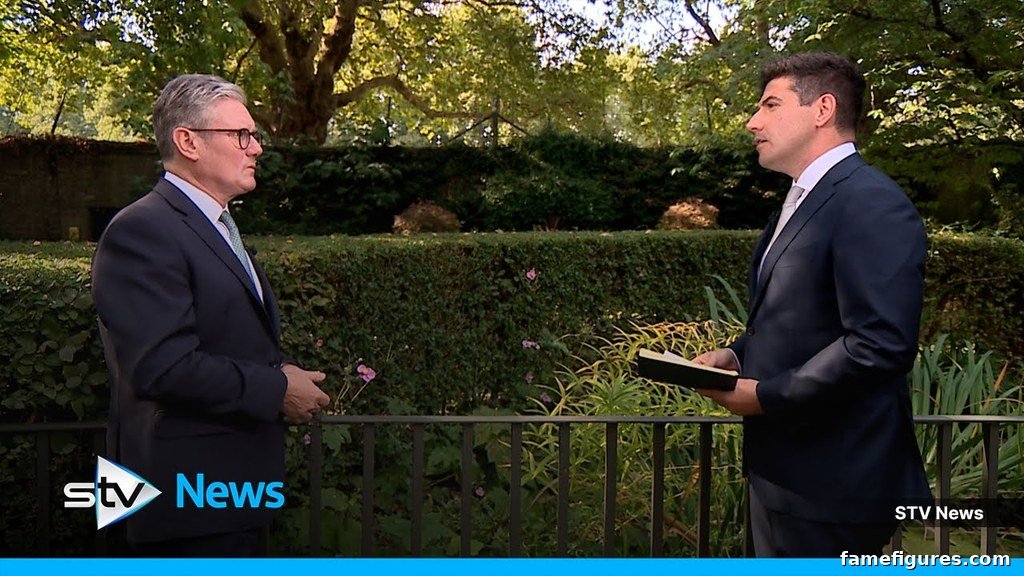
He was clearly delighted to be back. “I’m delighted to be returning to Westminster as a member of the STV News team, at such a crucial time for politics in Scotland and the whole UK,” he said at the time. “It’s a privilege to help viewers make sense of events at Westminster, in the lead up to what promises to be a dramatic general election campaign.” Linda Grimes-Douglas, STV’s Head of News, said she had “no doubt that Paris will do this with great skill and finesse”.
The general election he had been hired to cover came in July 2024, and it delivered the landslide Labour victory he had been preparing viewers for. But his STV work ranged far beyond election night. His analysis pieces for the channel covered the biggest questions in Scottish politics: what the UK government’s benefits crackdown would mean for Scotland, whether a £6 billion cut to disability benefits would become Keir Starmer’s next spending battle, what Donald Trump’s election win meant for Scotland, whether Scotland’s energy “gold rush” was being taxed into oblivion, and whether Nigel Farage could help Reform win seats at the 2026 Holyrood election. He interviewed the prime minister on camera about the Grangemouth closure, and reported live from Westminster on the biggest nights in the political calendar — the King’s Speech among them.
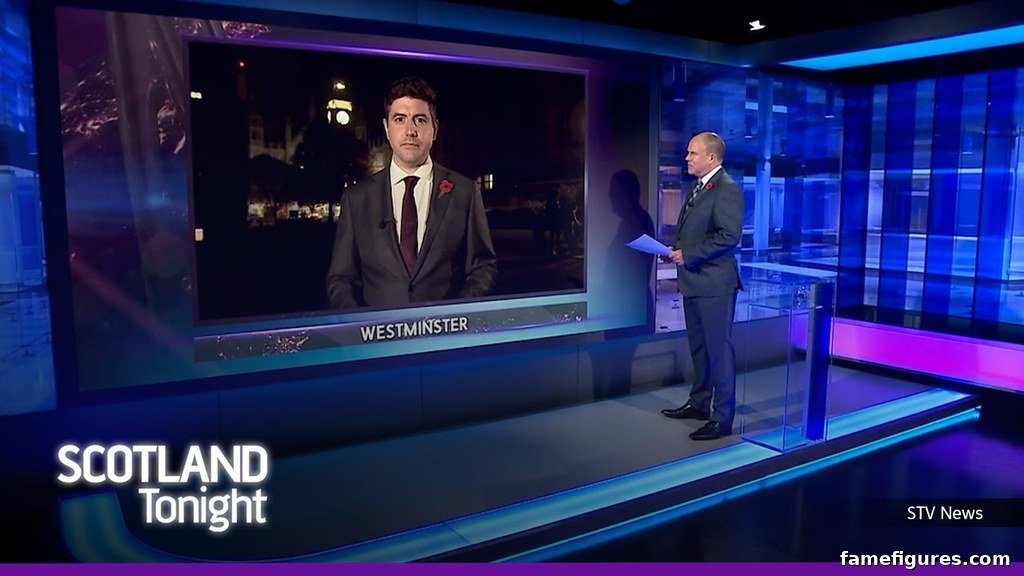
He stayed at STV for around two years. The parliamentary register still listed him as an STV journalist in August 2025 — but by December that year he had moved to the BBC.
BBC Scotland: Westminster Correspondent
By December 2025, the parliamentary register listed Paris Gourtsoyannis as a BBC journalist, and he has been the BBC Scotland Westminster correspondent ever since. The BBC’s own listings name him among the Westminster correspondents serving Reporting Scotland, the corporation’s main national television news programme for Scotland, and his byline has appeared across BBC News online, on television and on radio. It is the role his whole career had been building towards: the Scottish audience’s eyes and ears in Westminster.
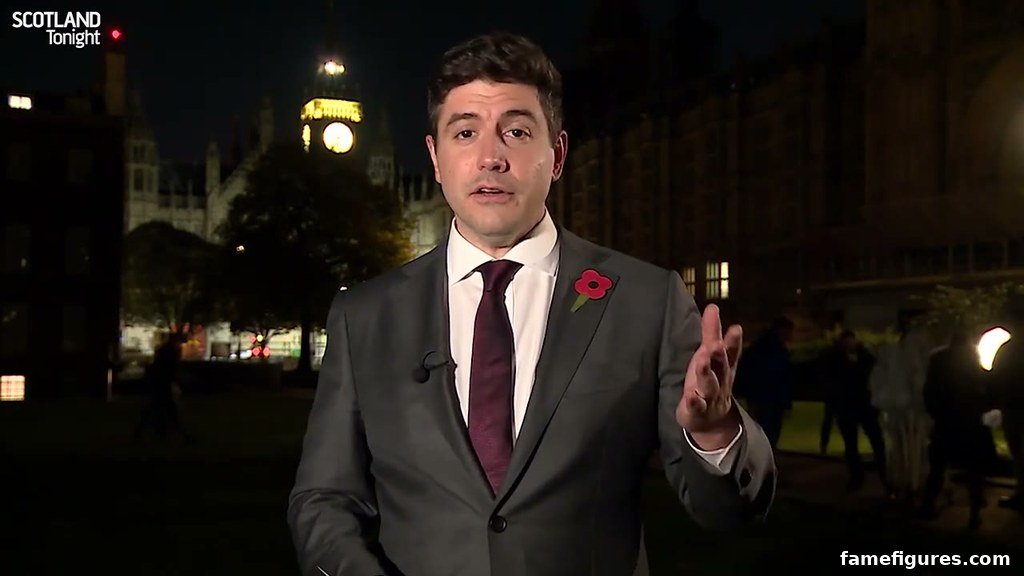
Paris Gourtsoyannis’s BBC work has been dominated by analysis — the kind of piece that explains not just what happened, but what it means. In January 2026 he travelled to Hinkley Point C, the nuclear power station at the centre of a growing political divide in Scotland, to report on a project that has become one of the big arguments ahead of the Scottish Parliament elections. He has written about Scottish Labour’s internal rows and the party’s plans to get Anas Sarwar into Bute House. He covered the dramatic Aberdeen South by-election of June 2026, when the Conservatives pulled off an unexpected win after Kemi Badenoch visited the city three times during the campaign, and he reported on Nigel Farage’s promise to ban foreign nationals from social housing. In May 2026 he was reporting from Glasgow on the Scottish Parliament election itself, telling the BBC what party sources were saying as the tallies came in.
He has also become a regular voice on Scotcast, the BBC’s Scottish news podcast, co-hosting its Politics Show episodes — discussing the future of Keir Starmer’s premiership, the Budget and what it means for Scotland, the row over the Rosebank oil field, and even whether Russian attacks on the undersea cables that carry Scotland’s internet are a real threat. It is a different kind of broadcasting from the nightly news: longer, looser and more conversational, and it suits a correspondent who has spent a decade and a half learning how Scottish politics actually works.
His recent BBC reporting shows the range of the job. He has covered the row over American military planes using Prestwick Airport, the blocked £1.5 billion Chinese plan for a wind turbine factory at Ardersier in the Highlands, the tribunal case of nurse Sandie Peggie, and the questions around the Scottish Secretary’s undeclared meetings with Peter Mandelson’s lobbying firm. He has reported on John Swinney’s pledge to bring Scotland’s bus networks under public control by 2031, and on the battle over the Rosebank oil field, where Scottish Labour has appealed to the Energy Secretary to approve drilling. It is the work of a correspondent who covers everything Westminster does to Scotland — and everything Scotland does back.
Personal Life
So, is Paris Gourtsoyannis married? The honest answer is that nobody outside his private circle knows — because he has never said. No wife has ever been named in any interview, profile or public record, and no engagement or wedding has ever been announced. Searches for his marital status return nothing at all: no biography site, no newspaper profile and no social media post has ever confirmed a partner. The man who spends his working life asking politicians awkward questions has kept his own private life entirely out of the public eye.
The same is true of children. There is no publicly confirmed information that he has children, and no source — not his employers, not his own writing, not any profile — has ever described him as a father. His parents and siblings are likewise not publicly known. What is known is the background Paris Gourtsoyannis has shared himself: Canadian by birth, raised largely in Belgium, a Greek citizen who has made his home in Scotland. He is active on X, the platform formerly known as Twitter, under the handle @thistlejohn, where his posts are mostly about politics and his own reporting. Beyond that, he keeps his private life private — and a responsible biography should respect that boundary rather than invent a family for him.
What his public life does show is a man who has built a career on patience and persistence. Paris Gourtsoyannis started on a small specialist magazine in Edinburgh, worked his way through city and national newspapers, spent four years in the Westminster trenches during Brexit, learned television from the production gallery, and is now the BBC’s man in Westminster for Scotland. It is not a career built on noise or self-promotion. It is built on showing up, knowing the brief, and being trusted by the people who watch — the same qualities that took him from his first assignment, at a party leadership launch in 2011, to the lobby of the House of Commons fifteen years later.
If you enjoy reading about the people behind British television and journalism, FameFigures has more — the biographies of fellow presenters and broadcasters Laura Tobin, Louise Lear, Keeley Donovan, Alex Beresford, Tim Montgomerie and Stella Tsantekidou, plus a new profile published today on Josh Glancy.
FAQs
How old is Paris Gourtsoyannis?
His age has never been publicly confirmed, because his date of birth has never been published. What is known is that he graduated from the University of Edinburgh in 2010 and wrote in 2019 of having 13 years of experience of Scotland, which suggests he arrived in the country around 2006. Any exact age printed on a biography site is a guess, not a fact.
Is Paris Gourtsoyannis married?
There is no publicly confirmed information that he is married. No wife has been named, and no engagement or wedding has ever been announced in any interview, profile or public record. He keeps his private life out of the public eye, so the honest answer is that his marital status is not publicly known.
Who is Paris Gourtsoyannis’s partner?
No partner has ever been publicly confirmed. Unlike many public figures, he has never named a wife, girlfriend or partner in any interview or on social media, and no reliable source has identified one. Any website naming a partner for him is guessing.
Does Paris Gourtsoyannis have children?
There is no publicly confirmed information that he has children. His employers, his own writing and every profile of him are silent on the subject, and he has never described himself publicly as a father.
Where is Paris Gourtsoyannis from?
He was born in Canada and lived for most of the first half of his life in Belgium, in his own words. He is a Greek citizen and a European, and he has lived in Scotland since around 2006, graduating from the University of Edinburgh in 2010. Scotland has been his home and his reporting beat ever since.
What is Paris Gourtsoyannis’s net worth?
There is no reliable net-worth figure for him. No figure has ever been publicly disclosed, no outlet has reported one with a source behind it, and the BBC does not publish personal salary figures for its correspondents. Any number printed on a biography site should be treated as a guess.
Where does Paris Gourtsoyannis work now?
He is the BBC Scotland Westminster correspondent, a role he has held since the second half of 2025. Before that he was Westminster correspondent at STV News from October 2023, and before that he spent more than four years as Westminster correspondent at The Scotsman, after earlier roles at Holyrood magazine, the Edinburgh Evening News and The Times.