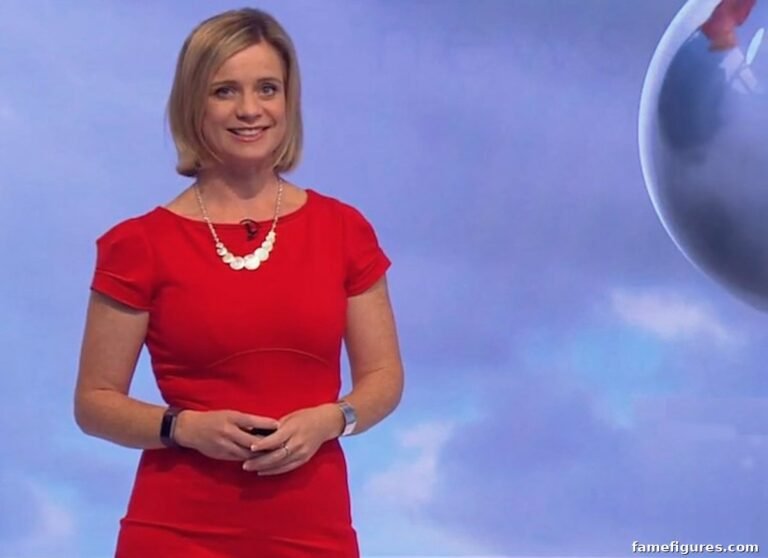
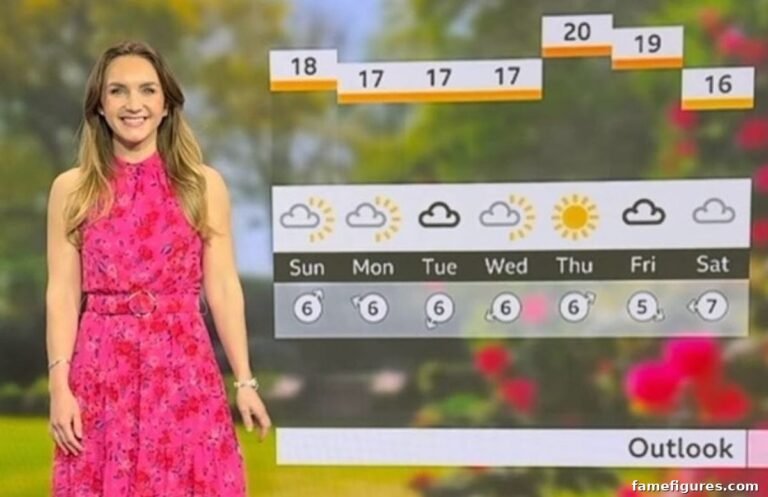
Molly Brewer: Biography, Age, Partner, Family & Career
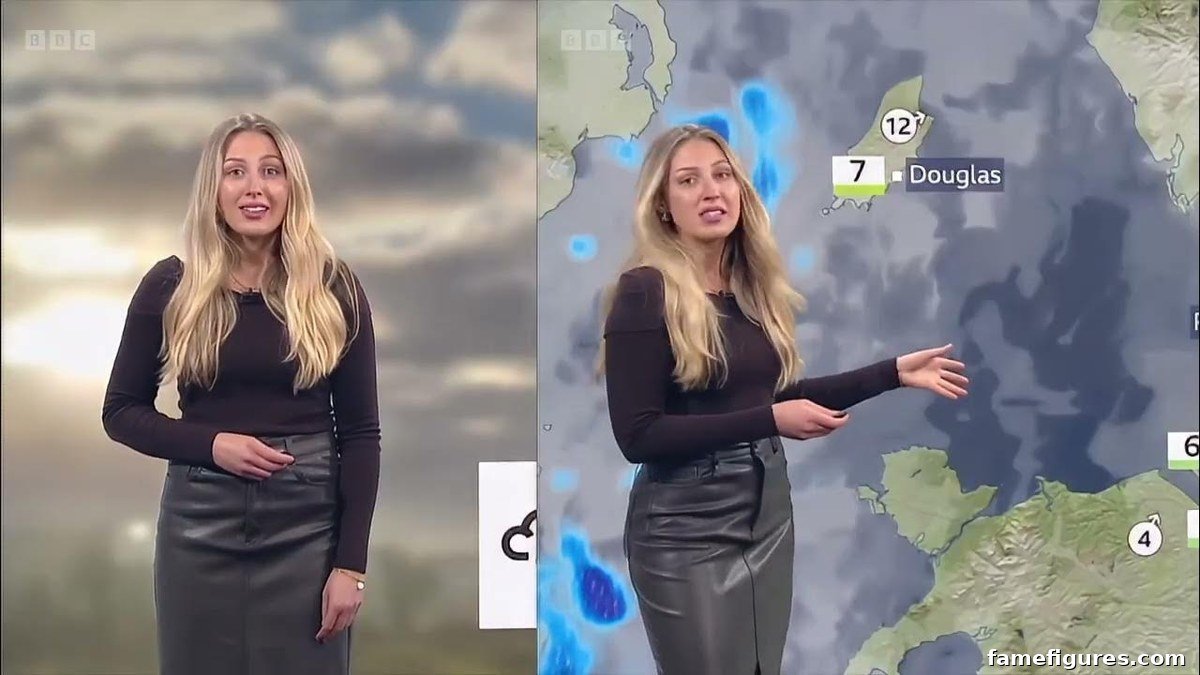

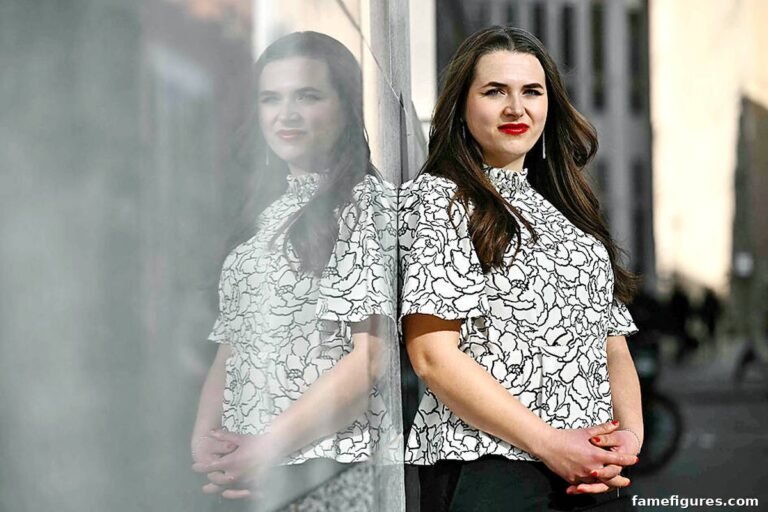
Every weeknight, viewers across the North West settle down for the evening news — and when the weather comes on, it is often Molly Brewer standing in front of the map. She is the journalist turned weather presenter on BBC North West Tonight, a Lancashire lass who worked her way from a university journalism course in Preston to one of the most familiar faces on regional television. In August 2026 she became a national talking point in a single evening, when comedian Peter Kay wandered into her live forecast and refused to leave. This is the full story of her life and career — her age, her Lancashire roots, her path into broadcasting and an honest answer to the questions people keep asking about her partner and family.
Quick Facts
| Full name | Molly Brewer |
| Date of birth | 29 May 1997 (inferred from her own birthday post — not confirmed in a formal BBC biography) |
| Age | 29 (as of November 2026) |
| Birthplace | Lancashire, England (exact town not publicly confirmed) |
| Nationality | British |
| Education | Journalism degree, University of Central Lancashire (2015–2018) |
| Occupation | Journalist and weather presenter |
| Known for | BBC North West Tonight (weather presenter, Monday, Thursday and Friday) |
| Employer | BBC |
| Based in | Manchester |
| Partner | Has publicly referred to her boyfriend (Instagram user @spykebaxter); no husband or engagement confirmed |
| Children | None publicly confirmed |
| Social media | @moll_brewer on Instagram and X |
Early Life and Education
She grew up in Lancashire, with her strongest ties to the Fylde Coast and the Blackpool area. She has described herself as a “Lancashire lass”, and her early education and career details connect her with Poulton-le-Fylde and Blackpool. Her exact birthplace has never been publicly confirmed, and it is fair to say only that she was raised in Lancashire and still feels a close bond with the county — a bond that matters a great deal in her job, because the people watching her forecasts are her neighbours.
That local connection shaped her choice of university. In 2015 she enrolled at the University of Central Lancashire in Preston to study journalism, a three-year course that gave her practical training in television, radio, news writing, media law and court reporting. Her degree also included NCTJ training and Teeline shorthand at 100 words per minute — the old-school skills that still decide whether a young reporter can keep up in a live newsroom. During her studies she took part in student television work and gained production experience, learning how a bulletin is put together from the inside rather than just how to read one.
She graduated in 2018, and the university has stayed part of her story ever since. Years later she returned to Preston to host a BBC Verify careers event, helping college students from across the region learn how to check digital content, examine images, recognise false claims and understand how a modern newsroom works. “I was thrilled to be invited back to the University of Lancashire, the place where it all began for my own journalism career,” she said at the time, adding that a lot had changed in the media world since she graduated. It was a neat full circle: the student who had learned to verify facts was now teaching the next generation to do the same.
Before the BBC, she picked up early broadcast experience in local media, including a link with Radio Wave 96.5, the station serving Blackpool and the Fylde Coast. It was the kind of grounding that regional broadcasting still runs on — small stations, local stories, learning to talk to ordinary people and make their concerns sound like they matter, because they do.
Career
BBC Journalism and Community Reporting
Her BBC career began with regional journalism rather than the weather. She covered community stories, social issues, local culture and human-interest features across the North West — the unglamorous, essential work that regional news depends on. Her reporting has touched on housing problems, accessibility, young carers, local charities, education projects, theatre groups and coastal wildlife. She has also worked on stories linked with Manchester Pride, disability, social isolation and local sport. It is a wide range, and it shows what her colleagues value in her: she is not limited to one kind of story, and she tells regional stories with care and a clear structure.
That journalism background is what sets her apart from presenters who only ever read a forecast. She learned to handle interviews, develop a story, and explain a serious subject in plain language — and all of it feeds directly into the way she presents the weather now. When she tells viewers it will rain on Thursday, she also tells them what it means: which roads will be slow, which outdoor plans need a rethink, and who should take extra care. The forecast is the headline; the journalism is what makes it useful.
The Move Into Weather Presenting
In October 2024, she shared that she was training to present the weather alongside her journalism duties. It was an important step, and a harder one than it looks from the sofa. Weather presenting means understanding forecast charts, pressure systems, rain bands, wind direction and regional differences — and then turning all of that into a clear explanation in under two minutes, live, with no second take. Her journalism training helped: she already knew how to ask the questions viewers actually need answered. What will happen? When will it happen? Which places will be affected? How could it change travel, work or plans?
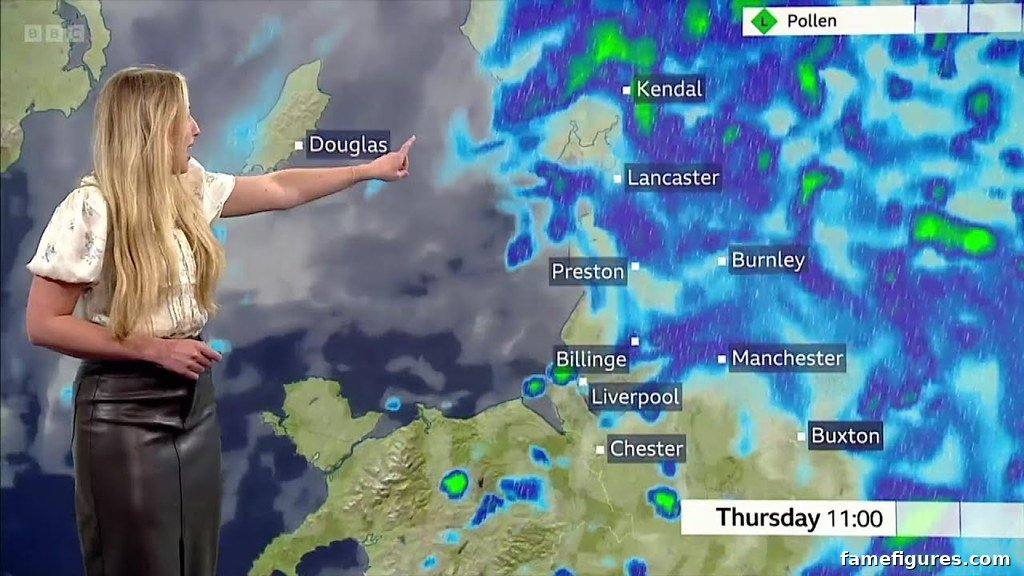
The BBC’s trust in her grew quickly. She is now listed as the programme’s main weather presenter, named for the Monday, Thursday and Friday forecasts on North West Tonight. Schedules change, and cover presenters step in, but holding the main slot on three nights a week is a clear sign of how far she has come in a short time — from a journalism graduate in Preston to the person the North West relies on to know whether to take an umbrella.
The Peter Kay Moment
On a Wednesday evening in August 2026, she became famous far beyond the North West — and she did almost nothing to make it happen. She was in the middle of a live forecast, warning viewers about a yellow thunderstorm warning for the following night, when comedian Peter Kay walked into shot behind her. Kay had been a guest on the main programme to talk about a one-off show at the Opera House in Blackpool, raising money for a teenager who needed heart treatment in the United States. Instead of staying in the green room, he decided to explore the set while the cameras were still rolling.
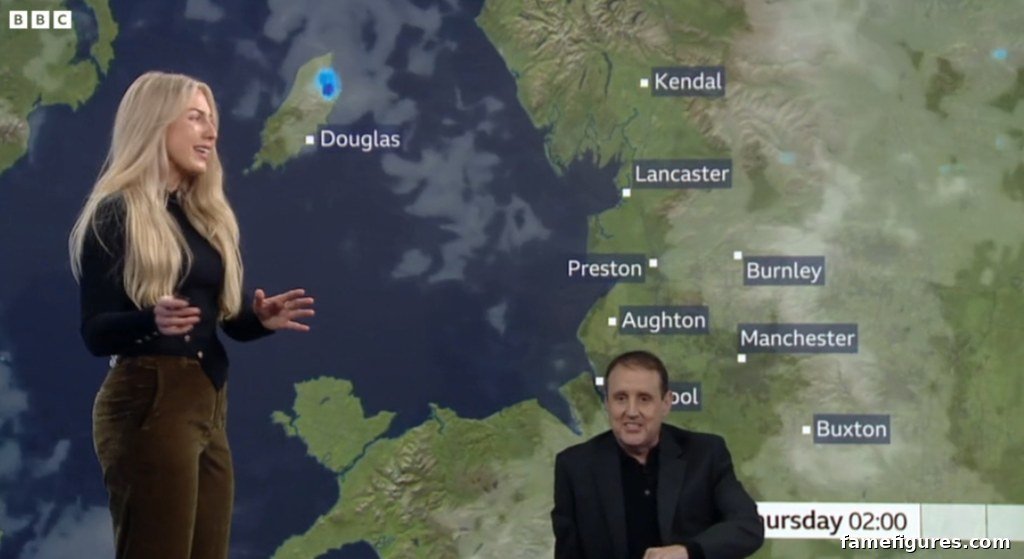
“Oh! And we’ve got Peter, as well,” said a shocked Molly, as Kay perched himself in front of the green screen right in the middle of the frame. “Go on, Molly. I’m sitting here, I’ll not disturb you,” he told her — and then proceeded to disturb her thoroughly, covering different areas of the map, pretending to be rained on, and eventually taking her clicker and changing the on-screen graphics himself. She tried to contain her laughter and carry on with the forecast, and somehow she did, finishing the segment with the audience in stitches.
The clip spread everywhere overnight. Newspapers and news sites across the country picked it up, and viewers wrote in to say it was the funniest thing they had seen on the news in years. It was also, as everyone in the North West quickly pointed out, not the first time Peter Kay had done this. Back in 2011 he had crawled on screen during a forecast by the late Dianne Oxberry, the programme’s first dedicated weather presenter, who died in 2019. She herself later reflected on the moment on social media — and admitted, with characteristic honesty, that she did not think she had handled the surprise quite as smoothly as Oxberry had done fifteen years earlier. It was a generous, funny response, and it told viewers something about her: she can laugh at herself, and she knows whose shoulders she is standing on.
Heatwaves and Climate Communication
Long before the Peter Kay clip, she was already building a reputation for the way she handles the weather that actually matters — heatwaves. One of her segments explained the arrival of a third heatwave in a summer, and why it would feel different from the hot spell that had come before it. It is the kind of coverage that separates a presenter from a reader of numbers: she added context instead of just giving temperatures, explaining why the heat would build, who would feel it most, and what would change when fresher air arrived.
She also completed her first outdoor weather broadcast during a week of high temperatures, an experience she later called a career highlight. In a personal reflection she noted that the heat was enjoyable for many people, but also a reminder of how climate change is shaping extreme weather. Her message balanced enjoyment with safety — make the most of the sunshine, take care in the heat, and remember that unusual temperatures can carry real health risks. It is a difficult tone to strike on live television, warning people without frightening them, and it is one of the reasons her forecasts feel different from a list of numbers read off a screen.
Her style, in general, is calm, friendly and direct. She avoids making forecasts feel too technical and focuses on what conditions will mean for real life — journeys, school runs, outdoor events, older relatives, pets. That matters more than it sounds. A clear forecast helps families prepare for heat, heavy rain or strong winds, and it helps schools, commuters and event organisers plan their day. Regional weather is, in the end, a public service, and she treats it like one.
Personal Life
She keeps much of her personal life private, and her social media reflects that balance. Her posts mix friends, family, travel, running and work milestones — enough to show who she is, without turning her private life into content. She lives in Manchester now, and remains closely connected to Lancashire, travelling back to the Fylde Coast often. Her posts also show an interest in cats, music, travel and fitness, the ordinary pleasures of a twenty-something building a career in a new city.
So, does she have a husband? The honest answer is no — at least, not that she has ever announced. There is no confirmed announcement that she is married or engaged, and claims about a husband should be avoided unless she shares such news herself. What she has shared is a boyfriend: she has publicly referred to the Instagram user @spykebaxter as her boyfriend. Some websites attach a full name to that account, but the safer wording — and the honest one — is that she has publicly identified the account holder as her partner, and nothing more has been confirmed.
Does she have children? There is no confirmed statement that she has children. Her BBC work, her university material and her social media content do not identify her as a parent. That does not prove she has no children — it means she has chosen not to confirm that part of her life, and a responsible biography should respect that boundary rather than fill the gap with a guess. The same goes for her parents and siblings: she has shared family moments online, but the names and careers of her parents and siblings have not been firmly confirmed through dependable material, and some entertainment websites publish family claims without any clear proof. Her Lancashire roots and close family ties are clear; the details are hers to share, if she ever chooses to.
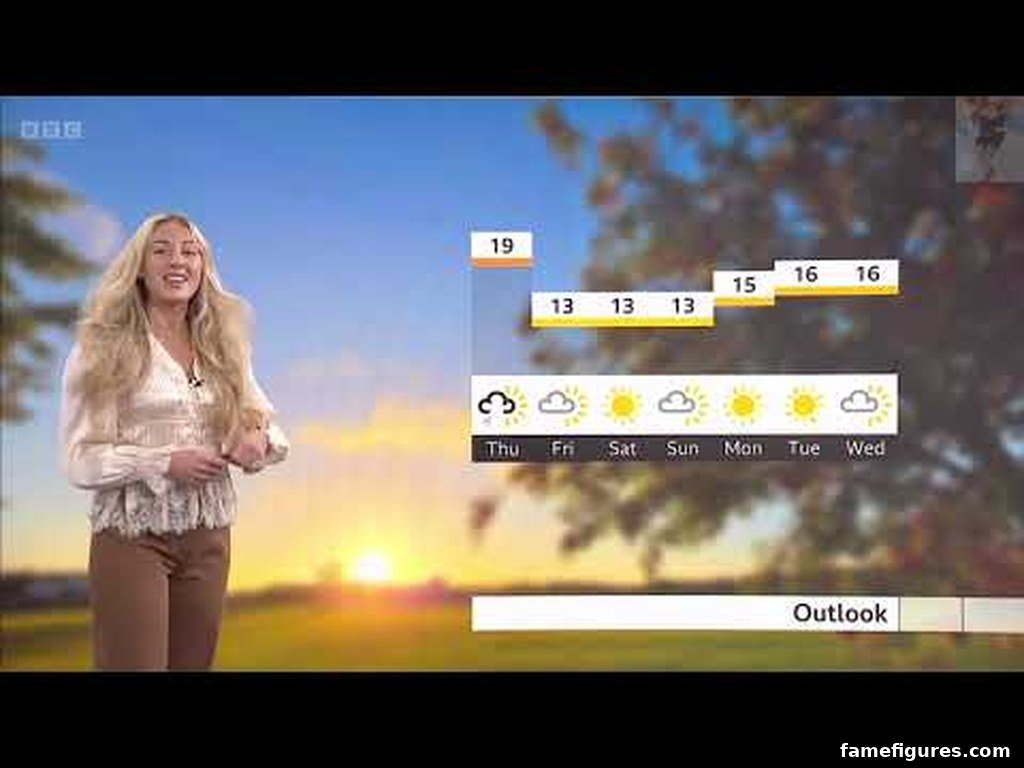
One part of her life outside broadcasting is well documented, because she chose to share it. Running is one of her known interests, and in October 2025 she completed her first Manchester Half Marathon — thirteen miles through the streets of the city she now calls home, and a personal achievement she marked publicly. She is active on social media as @moll_brewer on both Instagram and X, where her content mixes BBC clips, weather updates, behind-the-scenes moments and career milestones with the occasional personal post. Her Instagram account has shared hundreds of posts and attracted thousands of followers, though exact figures change often and should always be treated as a snapshot. Her X account leans more towards journalism, regional news and professional updates.
If you enjoy reading about the people behind British television, FameFigures has more — the biographies of fellow presenters Laura Tobin, Louise Lear, Keeley Donovan, Helen Willetts, Sarah Keith-Lucas, Alex Beresford, Roo Irvine and Holly Hamilton, plus new profiles published today on Jo Blythe and Stella Tsantekidou.
FAQs
How old is Molly Brewer?
Molly Brewer is 29 years old as of November 2026. A birthday post she shared on 29 May 2024 said she was turning 27, which points to 29 May 1997 as her date of birth. Her full date of birth has not been confirmed in a formal BBC biography, so the 29 May 1997 date rests on her own social media post rather than an official record.
Who is Molly Brewer?
Molly Brewer is a British journalist and weather presenter known for her work on BBC North West Tonight. She is from Lancashire, lives in Manchester, studied journalism at the University of Central Lancashire, and is the programme’s main weather presenter on Mondays, Thursdays and Fridays.
Is Molly Brewer married?
No — Molly Brewer has not announced that she is married, and there is no confirmed engagement or wedding announcement. She has publicly referred to the Instagram user @spykebaxter as her boyfriend, but no husband has been named or confirmed.
Who is Molly Brewer’s partner?
She has publicly referred to the Instagram user @spykebaxter as her boyfriend. No full name has been reliably confirmed for the account holder, and there is no confirmed announcement of an engagement or marriage.
Does Molly Brewer have children?
There is no publicly confirmed information that she has children. Her BBC work, university material and social media content do not identify her as a parent, and she has not confirmed this part of her life either way.
What is Molly Brewer’s net worth?
There is no reliable net-worth figure for Molly Brewer. No figure has ever been publicly disclosed, no outlet has reported one with a source behind it, and the BBC has not published a personal salary figure for her. Regional presenters rarely disclose their earnings, and any number printed on a biography site should be treated as a guess.
What happened with Peter Kay and Molly Brewer?
In August 2026, comedian Peter Kay gatecrashed her live weather forecast on BBC North West Tonight, walking into shot as she warned of a yellow thunderstorm warning, sitting down in front of the green screen and taking her clicker to change the graphics. It echoed his famous 2011 interruption of the late Dianne Oxberry on the same programme. She later said she did not think she had handled it as smoothly as Oxberry had.