Stella Tsantekidou: Biography, Career, Family & TV Punditry

Every week, Stella Tsantekidou walks into television studios where she is very often the only left-wing voice in the room — and says exactly what she thinks anyway. A Greek-born writer, former Labour parliamentary aide and Head of Policy and Campaigns at the charity Catch22, she has become one of the most recognisable left-wing pundits on British television, sparring with ministers and millionaires on GB News, TalkTV and Channel 5 while writing a monthly column for LabourList and her Substack, The Human Carbohydrate. Yet for all her time in the spotlight, the basic facts about her life — her age, her family, her private life — remain almost entirely undisclosed. This is the full, verified story of her life and career — including the 2026 Labour NEC campaign she ran, and lost, and the honest answers to the questions people keep asking about her.
Quick Facts
| Full name | Stella Tsantekidou |
| Date of birth | Not publicly disclosed |
| Age | Not publicly disclosed |
| Birthplace | Thessaloniki, Greece (per biographical profiles) |
| Nationality | Greek |
| Based in | London, England |
| Education | Law and Politics, Queen Mary University of London |
| Occupation | Political commentator, writer, Head of Policy and Campaigns at Catch22 |
| Known for | GB News, TalkTV and Channel 5 punditry; LabourList columnist; The Human Carbohydrate (Substack) |
| Employer | Catch22 (Head of Policy and Campaigns, since July 2022) |
| Husband / partner | No publicly confirmed husband or partner |
| Children | None publicly confirmed |
| X (Twitter) | @Stsantek |
Early Life and Education
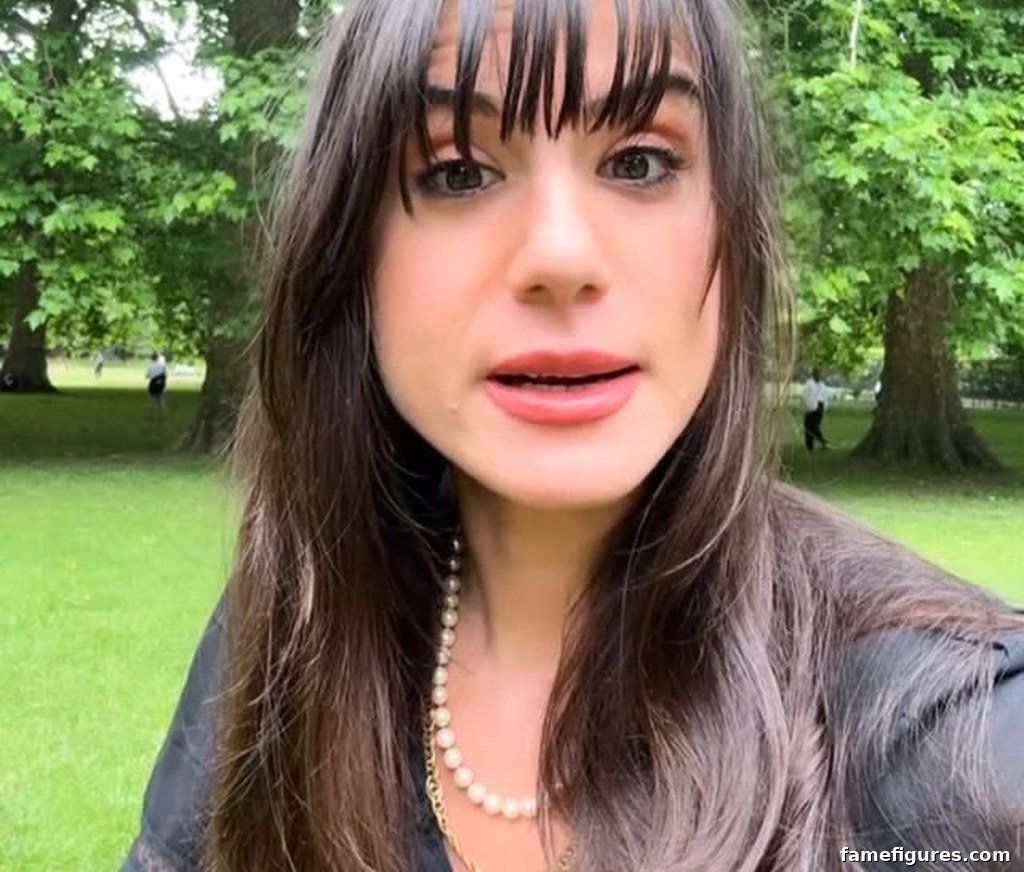
Stella Tsantekidou was born and raised in Greece — biographical profiles name Thessaloniki as her hometown — and she has said it herself: “I was born and raised in Greece, so never imprinted on a faction myself.” Her Greek roots are not a footnote to her story; they are the thread running through it. In a piece for UnHerd titled “My Greek town doesn’t need more tradwives”, she wrote about her hometown and the traditional expectations placed on young women there — and about choosing a very different path. She has described realising, on only her second day in the UK at a freshers’ week club night, that she was “not like British girls”. It was the first of many moments in which being an outsider became her sharpest political lens.
She came to Britain to study, enrolling at Queen Mary University of London to read Law and Politics. The university’s own records place her there in 2015, when she reached the final of its George Hinde Moot — the law school’s annual advocacy competition — and a photograph from March 2017 already shows her as a Queen Mary graduate, addressing a protest in Parliament Square in defence of EU citizens’ right to remain in the UK after the Brexit vote. Student politics was not a rehearsal for her later career; it was already the real thing.
Her own account of those years is characteristically frank. At nineteen, with Ed Miliband leading the Labour Party, she joined the Miliwagon — the travelling campaign of young volunteers who followed the Labour leader around the country in the run-up to the 2015 general election — after a university friend started a Facebook group called “Ed Miliband Is Fit”. She had, in her own words, been “dumped by my Tory boyfriend and was firmly in love with a Labour parliamentary staffer”, with “nothing to do and energy to burn”. It is a joke with a serious point: as she later wrote, “creating memes at 19 didn’t stop me from drafting policy papers at 29.” The memes and the policy papers were always the same project.
Career
Parliament, the CBI and Crisis
Stella Tsantekidou’s first foothold in British politics was inside Parliament itself. Writing for the Greater London Project, she described the feeling of first walking into the Palace of Westminster as a young politics obsessive: “If you’ve ever been young and obsessed with politics, you will know how I felt when I first walked into Parliament.” She went on to work as a parliamentary aide — the House of Commons register of interests lists her on the staff of the Labour MP Anna McMorrin, and she has since been described as a former parliamentary aide to several Labour frontbenchers. It was the education no degree could give her: how Westminster actually works, who holds power, and how little of it ever reaches the people it is supposed to serve.
Her political education was not confined to Britain. In 2016 she crossed the Atlantic to work as a field organiser on Bernie Sanders’ campaign for the Democratic presidential nomination — an experience she still cites as formative, and one that placed her in the generation of young left-wing activists who learned their trade knocking on doors rather than sitting in think tanks. Back in London, she moved through the world of public affairs: first as a Senior Campaigns Adviser at the CBI, the business lobby group, in 2020–2021, then as a Senior Public Affairs and Campaigns Officer at Crisis, the homelessness charity, in 2021–2022. The two jobs look like opposites — business on one side, charity on the other — but they taught her the same skill from both directions: how to get a government to listen.
Catch22: Head of Policy and Campaigns
In July 2022, Stella Tsantekidou joined Catch22, the social enterprise that runs public services across employability, justice, education and social care, as its Head of Policy and Campaigns — the role she still holds. It is the job that anchors her professional life. At Catch22 she leads policy and campaign strategy, arguing that public services should be designed around the evidence of the frontline workers who deliver them, and she has pushed the organisation to campaign on youth crime prevention, care leavers’ rights and jobs for young people in underserved communities. She presented the fourth series of Catch22’s own podcast, Experts by Experience, built around the charity’s manifesto, 22 ways to build resilience and aspiration in people and communities, and has written about translating policy priorities into practice at the party conferences, where Catch22 hosted events on tackling youth violence.
The role also explains her particular style as a commentator. She does not argue from theory alone; she argues from the services she helps run and the people who use them. When she talks about welfare, youth justice or homelessness on television, she is talking about the caseloads she sees in her day job — which is part of why her interventions land differently from those of the average studio pundit.
Television: GB News, TalkTV and Channel 5
It was television that made her a public figure. In September 2024 she appeared on The Political Press Box, the podcast hosted by Ian Silvera, as its first-ever TV commentator guest — introduced as “a former Labour staffer turned TV pundit” who “appears on TalkTV, Channel 5, GB News and a range of other current affairs shows”. The conversation was about “what life is like touring the studios”, and it captured her unusual position exactly: a left-wing, immigrant, working-age woman who makes her living arguing with the right on its own channels.
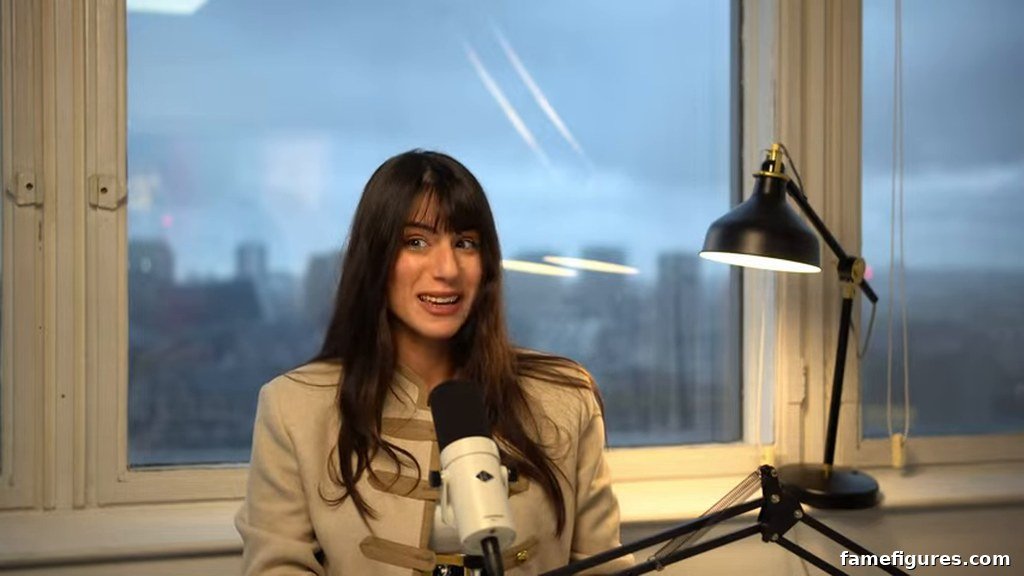
Her GB News appearances have produced some of her most widely shared moments. In one heated exchange with the former cabinet minister Michael Portillo, she linked Reform UK’s deportation proposals to the war in Gaza, arguing that the refugee crisis should be stopped at its root. “Nigel Farage loves slogans, but he has zero solutions,” she told him. Portillo, visibly taken aback, warned her that voters might find her “very detached” — and she answered with the practical case for Labour’s own asylum reforms, from reconsidering how the European Convention on Human Rights is applied in British courts to removing judicial oversight from parts of the process. “That is the actual, practical, boring solution,” she said. “It doesn’t grab the headlines in the same way when Nigel Farage speaks.”
The most recent of those moments came on 2 November 2026, on Patrick Christys’ GB News show. Midway through a blazing row about the Home Secretary Shabana Mahmood’s new rules on indefinite leave to remain, the left-wing panellist Benjamin Butterworth abruptly left the set after clashing with the Daily Express columnist Carole Malone — and Stella Tsantekidou was brought on as his replacement. “Sorry, I just need to explain that Stella’s here now, because Benjamin had to go,” Christys told viewers. “Surprise, surprise!” she replied, and carried on with the debate.
She has never pretended to enjoy the experience unreservedly. Writing in Left Foot Forward, she put it bluntly: “I’m tired of sitting on panels on GB News and other right-wing outlets and being lectured by millionaires about immigrants who don’t love the UK.” In The Critic, meanwhile, she described being “accused of hypocrisy on a TV panel last month” while debating Labour’s plan to lift the VAT exemption on private school fees — a policy she supports. The panels, in other words, are not a comfortable berth. They are the argument itself, conducted in public, several times a week.
Writing: LabourList, The Critic and The Human Carbohydrate
Alongside the broadcasting, Stella Tsantekidou has built a substantial body of written work. In September 2025, LabourList announced her as one of its new monthly columnists, describing her as “a political commentator and campaigner focusing on government service reform and healthy political dialogue”, best known “for talking to right-wingers (someone has to)” and for “loving the British more than they love themselves (again, someone has to)”. Her columns since then have ranged widely: “Let’s campaign with Oomf!”, a rallying cry to Labour’s very online young activists; “Sisters! Do it for yourselves!”, on the party’s problem with women; “If I were a tech bro, I would be backing Andy”, on Andy Burnham’s devolution plans; and “‘Vote Green, get Reform’ is not just Evil Sociopath propaganda”, on the Greens’ threat to Labour. Running through them is a private joke she has made public — Labour’s two archetypes, the “Evil Sociopaths” who scheme and the “Pathetic Losers” who endure — and a serious argument that the party has forgotten how to do politics.
Her bylines have also appeared in The Critic, where her pieces include “Labour’s mercurial kingmaker” — a profile of the Makerfield MP Josh Simons in the magazine’s June 2026 issue — “Polanski’s problems in St Pancras”, “The party of retailers”, “The triple lock must go” and “Censors create martyrs”. In July 2026 she reported from the first Great British CPAC for The Nation (“Dispatches From the First Great British CPAC”), and for the new title The Nerve she spent three days at the Alliance for Responsible Citizenship conference in London, reporting that its young attendees were not convinced by what they heard. Her bylines have also appeared in the Daily Express, and her essays have run in UnHerd and the Greater London Project, where her piece “House on the rocks” returned to the crumbling Palace of Westminster where her career began.
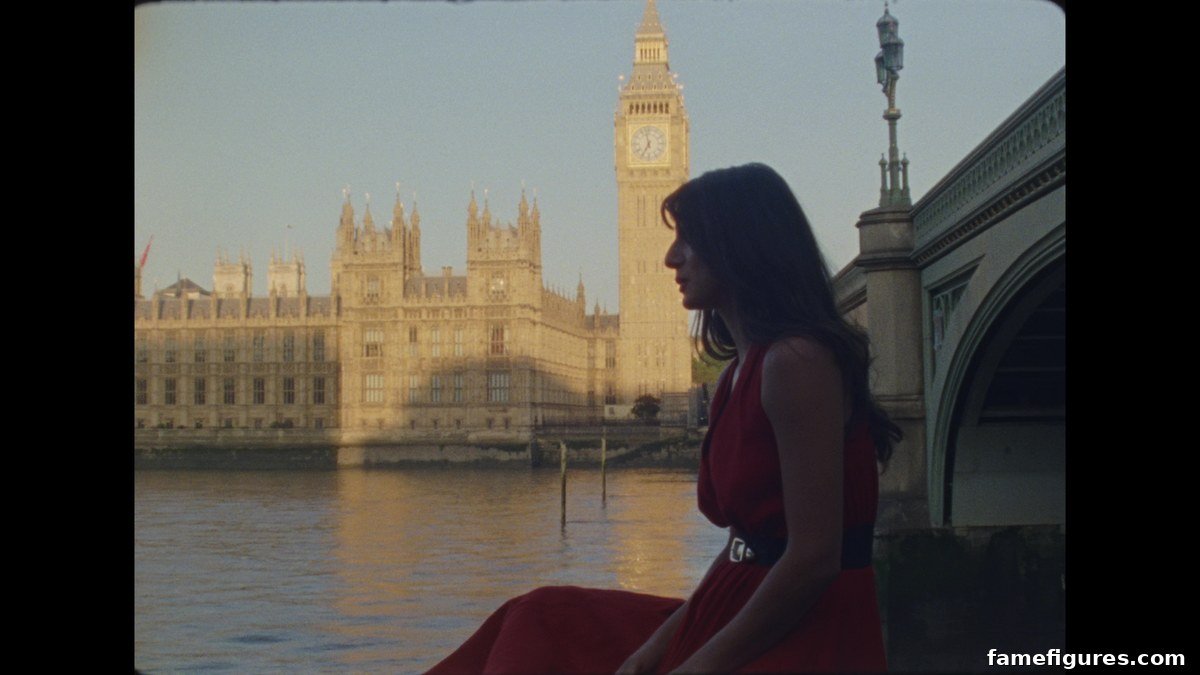
At the centre of her writing sits her Substack, The Human Carbohydrate — “I am good for you” is its tagline — which LabourList calls “a world politics Substack bestseller” and which has passed 5,000 subscribers. It is where she writes most freely: political and cultural diary entries, dispatches from the right-wing conferences she attends as an observer, and personal essays on feminism, relationships and being a Greek woman in British public life. In November 2025, Substack itself filmed her for its Substack on Film: London series, following her through Westminster at sunrise as she prepared for a television appearance later that day — a Greek writer and political pundit who had become, in the film’s words, a talking head in London “despite being a Greek immigrant to the UK”.
She is a regular podcast guest, too: a Budget reaction special on James Meadway’s economics podcast Macrodose, an episode of the Debated podcast in March 2026, a PoliticsJOE sofa debate about MPs drinking in Parliament in April 2026, and “The Left Wing Case for Patriotism” on The Next Generation in November 2026.
The 2026 Labour NEC Campaign
In early 2026, Stella Tsantekidou put her name to something bigger than a column or a panel appearance: she stood for election to Labour’s National Executive Committee, the party’s governing body. She ran on the slate of Restoration, a newly formed organising network that describes itself as a “fraternity of populists, hopeful patriots and communitarians” and campaigns to restore working-class values and traditions inside the party. Restoration announced its five candidates in February 2026 — Andrew Achilleos, Jacob Croft, David Littlefair, Sam Theodoridi and Tsantekidou — and by July she and Achilleos had each secured the five Constituency Labour Party nominations needed to make the ballot. “As a newly formed group in Labour we are humbled by the trust that those CLP members that have nominated us have given our candidates,” she said at the time. “When we formed Restoration, we felt that vital Labour traditions were vanishing from the party’s democracy and badly needed to be revived.”
The election itself, held between July and September 2026, did not go her way. She won 1,215 first-preference votes and was eliminated at the seventh stage of the count; only one Restoration candidate, Andrew Achilleos, was elected. Achilleos paid tribute to her in his victory comments: “I want to take this opportunity to send commiserations to my comrade Stella Tsantekidou who didn’t make it this time, but ran a strong campaign.” The result was a defeat, but it was also a measure of how far she had travelled: from a teenage volunteer on the Miliwagon to a candidate for the governing body of the party she had joined as a student — and one of the few NEC candidates in 2026 who was already a familiar face on national television.
Personal Life
For someone who argues in public for a living, Stella Tsantekidou keeps her private life remarkably private. There is no publicly confirmed information that she is married, no husband or partner has ever been named in any interview or public record, and no children have been publicly confirmed. Her social media is work, politics and writing — never a partner, never a wedding photograph. The honest statement is simply that her relationship status is not publicly known.

What she does talk about openly is the experience of being an immigrant in British public life. LabourList, introducing her as a columnist, noted that “Stella knows that, as an immigrant woman, she would not have been given space to comment on British politics were it not for the Labour movement” — and she has made that debt, and that outsider’s perspective, central to her public identity. She is based in London, where she lives and works, and she publishes most days: on X as @Stsantek, in her LabourList column, and on her Substack. The Greek town she grew up in, the London she moved to as a student, and the television studios she now tours are the three places her life has been lived — and she writes about all three as if they belonged to the same story, because for her they do.
Two cautions are worth stating plainly, because the internet is full of the opposite. Several biography websites print a birth year for her, an age range of “30–35”, a height of 5 feet 5 inches and a net worth of $300,000. None of these figures comes from any published source, interview or public record — they are guesses, copied from site to site, and this article does not repeat them as fact. Her exact age has never been publicly disclosed, and no reliable net-worth figure exists. What is documented, instead, is a career: Parliament, the CBI, Crisis, Catch22, the television studios, the columns, the Substack — and a 2026 NEC campaign that showed exactly how seriously she takes the party she joined as a teenager.
If you enjoy reading about the people behind British politics and television, FameFigures has more — the biography of fellow political commentator Tim Montgomerie, the weather presenters Laura Tobin, Louise Lear and Sarah Keith-Lucas, plus new profiles published today on Jo Blythe and Molly Brewer.
FAQs
How old is Stella Tsantekidou?
Her exact age has not been publicly disclosed, and no date of birth has ever been published. Biography websites guess that she is in her 30s — one puts her at “30–35” and another suggests a birth year between 1989 and 1994 — but neither cites a source, and neither figure should be treated as fact. What is known from her own writing is that she was nineteen when Ed Miliband led the Labour Party, and that she was drafting policy papers by twenty-nine.
Is Stella Tsantekidou married?
There is no publicly confirmed information that she is married. No wedding has been announced, no husband has been named in any interview or public record, and her official profiles do not mention a marriage.
Who is Stella Tsantekidou’s husband or partner?
She has not publicly confirmed a husband or a partner. Her relationship status is not publicly known, and she keeps her private life out of her public profiles entirely.
What is Stella Tsantekidou’s net worth?
There is no reliable net-worth figure. One biography site claims $300,000, but it cites no source, breaks the figure down into invented income streams, and no other outlet reports any figure at all. No net worth has ever been publicly disclosed.
What does Stella Tsantekidou do?
She is Head of Policy and Campaigns at Catch22, the social enterprise that runs public services across employability, justice, education and social care, a role she has held since July 2022. Alongside that she is a television pundit on GB News, TalkTV and Channel 5, a monthly columnist for LabourList, and the writer of the Substack The Human Carbohydrate.
Where is Stella Tsantekidou from?
She was born and raised in Greece — biographical profiles name Thessaloniki as her hometown — and moved to the United Kingdom to study at Queen Mary University of London. She is now based in London, and has described herself as a Greek immigrant to the UK who became a talking head on British television.
Did Stella Tsantekidou win a seat on Labour’s NEC?
No. She stood for Labour’s National Executive Committee in the 2026 elections on the Restoration slate, won 1,215 first-preference votes, and was eliminated at the seventh stage of the count. Only one Restoration candidate, Andrew Achilleos, was elected — and he publicly praised her campaign, saying she “ran a strong campaign”.